-
2023 Media Round Up
Another year gone, another year of reading, watching, and playing to reflect on. Last year, I focused my end-of-year round-up purely on my reading, as that is obviously the original focus of this blog. A year later, I now know I’d equally like to give credence to video games and television shows as well for their significant influence on my storytelling and worldbuilding interests.
As always, I find it impossible to properly list my favorites in a definitive ranking, so I’ve simply presented my five favorites in each medium in no particular order. Below that, I have also included a series of honorable mentions, works of fiction that came close to the best-of list but didn’t quite make it for one reason or another. Also, while many of these works came out in 2023, that wasn’t a precondition – this is merely a list of things that I first encountered this year.
Let’s begin!
Books
Aurora Burning (The Aurora Cycle #2)- Jay Kristoff/Amy Kaufman
To kick off this list, I’m beginning the only way I know how; namely, Jay Kristoff’s typical brand of writing a magical female lead fated to destroy a fascistic order. Kristoff does this in every one of his series’ and yet I love it. Aurora Burning is an adventurous and futuristic romp through a space-faring setting that lands somewhere between science fiction and science fantasy. While I enjoyed the first book, its sequel felt substantially more developed by comparison. Both books move at a breakneck speed, so the additional time provided in this sequel lets the characters actually breathe and stretch enough for the reader to get the measure of them. Like any good middle part of a trilogy, Aurora Burning ends with the characters in dire straits, granting them ample time to butt heads as their dramatically conflicting motivations and goals properly come into play. A solid recommendation for any fans of young-adult-style ensemble cast stories with more narrative oomph than your regular fare.
The Shadow of the Gods (The Bloodsworn Saga #1) – John Gwynne
John Gwynne’s writing has a magic that drips from the pages. He is a master of the historical high fantasy genre (I’m coining that term if it doesn’t already exist), already cutting his teeth in “The Faithful and The Fallen” and “Of Blood and Bone” with his fantastical take on ancient cultures of the British Isles. In this series debut, he utilizes old Scandinavian culture and mythology and applies it to a fantasy world pockmarked by warfare and struggle. As with any Gwynne novel, expect to find a vast array of main characters whose narratives sit far removed from each other before ultimately crashing together in unique and interesting ways. If nothing else, take the time to revel in the pure fun that is viking raiders clashing with monstrous beings straight out of legend.
Stormblood (The Common #1) – Jeremy Szal
My next favorite sci-fi read of the year treads the water between cyberpunk and space opera. Stormblood follows a war veteran suffering with the damage placed upon his body in his time as a special forces combatant. He’s one of the lucky few of his past compatriots, as many of them have started dying under suspicious circumstances. Adopting no shortage of noir staples, this novel features a criminal conspiracy criss-crossing a city-sized space station with no shortage of flashy firefights and the technobabble that old hats of the genre come to expect.
The Night Circus (Standalone) – Erin Morgenstern
This book is an oddity to me. It’s very slice of life-heavy, with little in the way of actual plot to drive the pages. I realized about halfway through that nothing really was going to happen in the story beyond what we’ve already been presented with. And yet, it remains one of the most engrossing reads I’ve yet encountered. I think this is really due to what’s perhaps the strongest conceptual setting you can imagine. Set before and during the turn of the 20th century, The Night Circus chronicles the decades-long competition between two stage magicians whose magic is very real. Over the course of their scheming, the circus transforms into impossible arrangements, the various performers forced to reckon with the unnatural effects the magic is having upon them. The circus becomes the setting for the magicians’ game, with the cost of losing their conflict unfolding before their eyes. The Night Circus is slow, broody, and dreamlike. It is nothing short of enthralling.
A Psalm for the Wild-Built (Monk and Robot #1) – Becky Chambers
As soon as a bookseller introduced this book to me by describing it as the journey of a tea-making monk upon their bike-powered camper/food truck with their innocent robot friend, I was sold. If that description sparks your interest, please go pick this up. It’s sub-200 pages and you can easily chew through it in a couple of reading sessions. Even if science fiction isn’t your normal fare, this is a special one and I will happily recommend it to anyone I meet. The focus of this novel boils down to a philosophical conflict between the monk and robot with one increasingly frustrated by burn-out and the other harboring no shortage of fascination with even the most mundane of occurrences. It’s the perfect balm for a tired soul.
Honorable Mentions
Murtagh – Christopher Paolini
Last Night at the Telegraph Club – Malinda Lo
Prose Edda – attr. Snorri Sturluson
They Met in a Tavern – Elijah MenchacaTV Series
Fleabag – Phoebe Waller-Bridge, Prime Video
This show is a must, must, MUST watch. This British dramedy is darkly comedic and absurd, and as vulgar as it is ultimately heartwarming. The titular main character is deeply flawed – selfish, neglectful, and addicted to her vices. Her almost painful pattern of behavior is necessary to witness in order to see where she takes herself by the end of this short series. Fleabag is about how each of us find our ways to navigate grief and a warning to not push it away too long. Again: give this a shot. I still go back and rewatch the “it’ll pass” scene occasionally, only to have my heart torn out one more time for Fleabag.
His Dark Materials – Jack Thorne, Max
I’m not the only one who was living in dire straits after the dual tragedies that were the Eragon and The Golden Compass movies that were released in quick succession in 2006 and 2007. Finally, Compass has returned to high-budget adaptation twelve years later with His Dark Materials. A proper serial adaptation of all three books, it’s as faithful to the source material as any fan would hope. Dafne Keen shines as Lyra Silvertongue Belacqua, though Ruth Wilson steals every scene she is in. Wilson is an absolutely terrifying Mrs. Coulter and precisely what I had envisaged a decade-and-a-half ago. This adaptation doesn’t shy away from tackling some of the books’ more convoluted and difficult topics, all handled with the proper gravitas that is due to the legendary trilogy.
Ragnarok – Adam Price, Netflix
Continuing with the Norse mythology phase I had this year is Netflix’s Ragnarok. Conceptually, this show is a take on Ibsen’s stage play Enemy of the People, but it replaces all the characters with figures out of norse mythology. Our main character, Magne, is himself a modern incarnation of the god Thor, destined to clash with the Jötunns who effectively rule his small town through their heavily polluting industrial complex. A lot of this series is the classic superhero bildungsroman, with the hero fighting with his call to action due to his admittedly strong moral code. It’s just a classic good story and perhaps the truest take on Norse mythology we’ve gotten in mainstream western media.
The Owl House – Dana Terrace, Disney/Disney+
This show, in many ways, feels like a spiritual successor to the classic Gravity Falls. It is on its surface a kids fantasy cartoon, with approachable adventure-of-the-week plots for audiences to follow. The main character Luz’s finding of a home in a world of witchcraft is a perfect allegory for any kid that feels out of place with their peers. Eda the Owl Lady is the perfect witchy aunt and her titular home becomes the perfect basecamp for all sorts of wild adventures. As the story reaches its climax, it satisfyingly builds upon all its disparate narratives, providing a high-stakes endgame very much in line with what audiences loved about Gravity Falls.
Let’s not forget, Terrace got Disney to air not one, not two, but three top-tier animated queer relationships in this show. Kudos.
I, Claudius – Jack Pulman, BBC/PBS Masterpiece Theatre
This is the kind of show they very much do not make anymore. BBC somehow managed to get perhaps the greatest lineup of British actors in history together to put on a Shakespearian-level drama of the Julio-Claudian Dynasty. We’ve got Brian Blessed, Patrick Stewart, John Hurt, Derek Jacobi, Siân Phillips, and George Baker, all busy plotting, backstabbing, and poisoning each other. Megalomania is on full display, with John Hurt in particular making me think he is actually insane, not just playing good old Caligula. This epoch is one of tragedy and is told through the voice of Derek Jacobi’s Emperor Claudius, providing just the right amount of regret over his inaction in stopping the corruption of his forebears.
Honorable Mentions
The Mandalorian, Season 3
Ahsoka*
The Rings of Power
The Last Kingdom: Seven Kings Must Die
The Last of Us
Wednesday
The Fall of the House of Usher*Ahsoka is easily the best Star Wars we received this year, but it still exists in the shadow of last year’s Andor. I feel like the five TV shows I identified as the best of the year would be misserved if I replaced one with Ahsoka, even though Star Wars is famously my favorite franchise. However, if we’re judging by individual episodes… Ahsoka Episode 5 “Shadow Warrior” is the greatest cinematic Star Wars project ever, bar none. It is pure, perfect Star Wars.
Video Games
Tunic – TUNIC Team, Multiplatform
Let me begin by stressing that this is one of those games that is best engaged with knowing as little about it ahead of time as possible. At its core, Tunic is an isometric action-adventure that has you controlling a fox wielding a sword and shield as he fights monsters, solves puzzles, and explores a vast and strange world. The similarities to classic The Legend of Zelda titles certainly does not stop there, but these discoveries are best left to your own playthrough. If you were lucky enough to have access to an NES and the classic 1986 The Legend of Zelda – and its vitally important instruction booklet – this little game is going to feel like going back in time. For myself, who has never played the original Zelda, I felt like Tunic gave me a modern window to actually understand what made the groundbreaking game so special to so many people.
Alan Wake 2 – Remedy Entertainment, Multiplatform
Alan Wake 2 is hard to categorize. It’s a third-person psychological horror with some combat, immediately reminiscent of the old Silent Hill games. I could go into the minute-to-minute gameplay and story beats, which all have their own merits, but I think what makes this game special is purely its atmosphere. There’s a moment in the plot where I realized that nothing going on is really as it seems and everything experienced by the characters is subjective. Once you grasp this you can just sit back and enjoy the ride. This game is built on dream logic. You’ll go down a flight of stairs from street level yet suddenly find yourself standing in the rain on a rooftop a block away. Your surroundings can shift in unsettling ways as the plot’s in-universe writer, Alan Wake, can literally change the story as progress. The tensest moments have you wandering through a looping series of hallways, taking clear inspiration from the legendary PT, eyes scouring the walls for any baddies ready to jump out at you from the shadows. The tension ratchets up with each loop you take, observing the small and large ways the path has changed. The best part of the game is easily the 15 minute rock opera you take part in that outlines the entirety of Alan’s life to that point. Remedy Entertainment has something fascinating building up in their nascent connected universe of games and I can’t wait to see what’s next.
Pikmin 4 – Nintendo EPD, Nintendo Switch
If you’ve ever watched a colony of ants going about its business – collecting food or materials, fighting off larger insects, and carrying things back to the colony – you understand the core concept of this game. In this series, you play as a miniature astronaut stranded on a planet that looks strangely like our own and work together with the local fauna, the Pikmin, to repair your starship, just as they rely on you to coordinate their efforts. Pikmin 4 is the first entry in the series I’ve actually ever put serious time into. I think that 10-year-old me tried out the first one at one point, but once I lost my little army of technicolor Pikmin to a single enemy I immediately shut it off and tried to forget about the tiny lives I’d led to an early demise. Fast forward to now and after trying it again I can easily say this is an endlessly fun and satisfying little adventure. The scenery is beautiful as you, an inch-tall character, travel through the vast jungles of grass and the mountainous furniture of a titanic back yard.
Also, this game has Oatchi. Nothing more really needs to be said.
God of War Ragnarök – Santa Monica Studio, Playstation 5
For nearly 20 years God of War has been notorious for being a gratuitously violent series, fronted by the single-mindedly vengeful Spartan Kratos. However in 2018, Santa Monica Studio pulled a 180 and decided to make the narrative front and center, presenting a thoughtful examination of godhood. Kratos, in self-imposed exile in Midgard after his destruction of the Greek pantheon, was rebuilt in the 2018 soft-reboot of the series, God of War. He was shown to be a remorseful man doing his best to protect his son from the curse of godhood that he is afraid he has passed down to him. While God of War’s thesis proclaims that anyone can overcome the demons of their past. Ragnarök, meanwhile, insists on rebuilding the legacy of the old gods, showing Kratos that it is possible to not only be a better man but also a better god. His foil in the story, Thor, is shown to be a vicious and vice-addicted person tormented by his emotionally absent father, just as Kratos once was by Zeus. Kratos’ insistence to Thor in the final act that “we must be better,” for the sake of their children is a legendary moment for this masterpiece.
Baldur’s Gate III – Larian Studios, Multiplatform
Yeah, of course this one is here. I mean, I’m still kind of blown away that this game exists. Operating off of a slightly modified version of Dungeons & Dragons Fifth Edition, Baldur’s Gate III is the ultimate virtual approximation of what it feels like to play a game of D&D. Even if that’s all it was, this would still be making it onto best-of lists for 2023. However, they managed to implement the most important part of any D&D game: the party of characters traveling and fighting together. With every companion character fully voice-acted and equipped with their own story arcs and goals in mind, the illusion is built that you’re just one of seven players sitting at a D&D table.
This game spent three years in Early Access, letting players enjoy a limited, and admittedly buggy, early buil of the game. It was good for whetting the fanbase’s appetite for what was to come, but it also helped to establish a rapport between players and developers as the fans became testers for all sorts of features and in return got a series of updates with news, changes, and additions. Perhaps the most amazing thing about Baldur’s Gate III is that this rapport has continued post-launch. In a gaming atmosphere where developers ship out buggy, half-complete messes and expect to nickel-and-dime their players for every little addition, Larian is overperforming. They remain constantly in touch with the player base, filling them in on expected releases and events. In many ways, Larian is the Dungeon Master for this game of D&D and, just like any good DM, they look forward to our feedback on what we together want this game to be.
Honorable Mentions
The Legend of Zelda: Tears of the Kingdom*
Signalis
Planet of Lana
Hardspace: Shipbreaker
Star Wars Empire at War: Awakening of the Rebellion**
Cocoon*I know, it surprises me too that Tears of the Kingdom is only an honorable mention. And while my previous blog post about my experience with it remains true, now that I’ve finished it I feel like it severely under-delivered. Much as I love the version of Hyrule created in Breath of the Wild, I feel like Nintendo’s lack of emphasis on traditional narrative is beginning to grate on me. Nintendo needs to find a way to balance their open-world formula with the strong linear storytelling the series is known for.
**The modding community is 100% responsible for keeping EAW alive nearly 20 years after its release. AOTR is my favorite of the bunch, providing a fleshed out sandbox in the theater of the Galactic Civil War.
alan wake, aurora-institute, baldurs gate, blogger, blogging, book, book review, books, bookstagram, dana terrace, erin morgenstern, fleabag, his dark materials, jay kristoff, larian, literature, luz noceda, monk and robot, nintendo, pikmin, ragnarok, reading, the owl house, tunic, writing, young-adult-sci-fi, zelda -
Tears of the Kingdom – Nintendo Captures Lightning in a Bottle… Then They Do It Again
To even begin to explain the impact of The Legend of Zelda, I’ll need to set the scene of Hateno Village. As an aid, here’s the town’s soundtrack: https://www.youtube.com/watch?v=Uj07-YU5cTk
Climbing to the highlands of Necluda in the east of Hyrule, your first sighting of Hateno is likely the village gate, a rustic construction consisting of two stone pillars propping up a simple wooden beam with a hanging sign. This architecture style becomes consistent with each passing building, both the form and function communicating the peace that the village promises. Stepping into the town proper, you’ll find yourself in an informal town square and be approached by the largest collection of Hylian citizens you’ve seen so far. One of the few settlements left untouched by the Calamity a century ago, the people here remain unchanged from their past ways, living simply and happily as a tight-knit farming community. Everything you see communicates the town’s status as a peaceful haven away from the destruction most of Hyrule faced 100 years ago.
The player’s only reminder of their ultimate goal to defeat Ganon is the comparatively high-tech laboratory whose silhouette can just be seen perched on a cliff above, a narrow switchback path leading the way. the player knows they’ll eventually have to climb the hill and carry on with preparing for their fight, but for now they feel like they’re able to take a breath.
My first visit to Hateno six years ago in Breath of the Wild gave me, the feeling of being a stranger coming to town, being welcomed by the villagers but also still feeling like an outsider. I was able to meet the townspeople and learn their various jobs and roles on the farms and even help out here and there. Over time, Hateno Village even becomes the place where you can build and decorate your own house in the game. Still, the overwhelming pressure of trying to save the ruined kingdom of Hyrule loomed overhead. Literally.
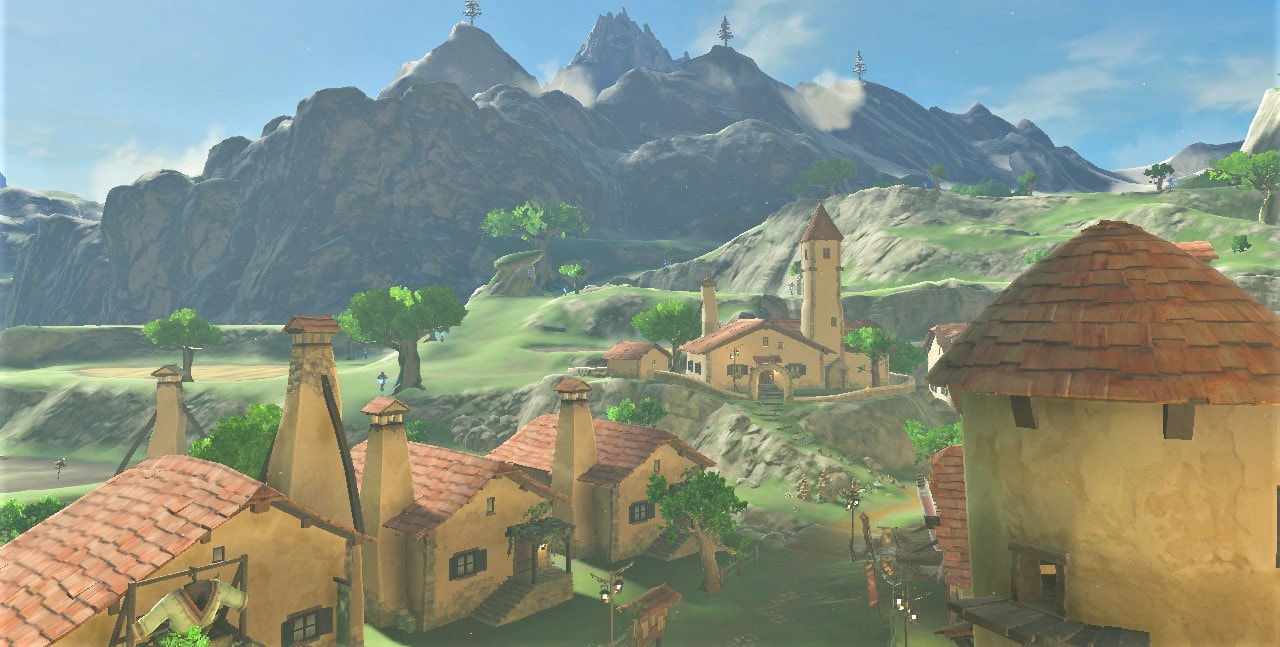
Hateno Village as seen in Breath of the Wild Walking back through the gate of Hateno in Tears of the Kingdom felt tangibly different. Rather than being a stranger coming to town, I had the distinct feeling of being a traveler returning home after years away and acclimating to the town moving on without you. The town has grown and even changed a little bit, new businesses have opened up and there are far more people walking around the town square. The town has even become a kingdom-wide destination, with travelers on the road and in other towns talking about Hateno’s up-and-coming status. A subplot was even written into the game where the conservative-minded farmers are at odds with the advances in style and technology embraced by other villagers. The player is given an active role in smoothing out tensions and helping the people come to a middle-ground solution. On finishing this little quest, I’d come to appreciate that the kingdom of Hyrule had evolved from being a vacant sandbox in BOTW to becoming a lived-in world that I had a part in as the player.
Weeks later, I have come to the realization that my first, and current playthrough of Tears of the Kingdom will likely be my only playthrough. I’m hard pressed to spend any of my free time on anything else besides romping around, above, and below the kingdom of Hyrule. I think that this will be my only playthrough because, even more so than its predecessor, Tears’ entire design ethos revolves around evoking a sense of wonder for the unknown.
Breath of the Wild released in early 2017 and delivered grandly on its promise of grounding the famously nebulous world of Hyrule into a geographically consistent world, one teeming with discovery and exploration. BOTW, often criticized for its lackadaisical approach to narrative, did at least establish an interesting world history to enrich its setting. The ‘lore’ was so interesting that Nintendo and Koei Tecmo teamed up to produce Age of Calamity, a game set in the events of BOTW’s history, giving players a non-canon taste of the rich story this Hyrule could offer. Six years later, it’s clear that Breath of the Wild was always intended to be the prequel laying the groundwork for the eventual 2023 main release, Tears of the Kingdom.
There’s tired, old adage that X walked so that Y could run. That’s all I can think of; there couldn’t be a better idiom to explain the relationship between the two games. TOTK was able to hit the ground flying because it felt like coming home. When I took that first leap off of the Great Sky Island after the introduction, I was presented with the same open-ended question as in BOTW. The expanse of Hyrule was below me and the only thing left to do was to choose which direction to walk. However, players are now equipped with all the knowledge and memories of their previous experiences in Hyrule.
An unknown amount of time has passed since the credits rolled on Breath of the Wild and players are dying to know how their favorite characters are all faring. Many players may seek out the friendly camaraderie found in a character like Prince Sidon of the Zora and rush off to the east. Maybe, knowing the ethnic origins of the game’s main villain, they’ll make for the Gerudo Desert in the southwest to seek insight on how to fight this new foe. Players such as myself, may feel tempted to head south and liberate the coastal Lurelin Village after hearing a rumor from passing travelers that pirates had invaded the town.
However, I quickly decided on my first destination. I felt compelled to grab one of my horses (sidenote – it was a stroke of genius by Nintendo to carry over your horses from BOTW) and travel northwest to the frigid Rito Village to check in on some of my favorite characters from the first game. Not to spoil anything, what I found surprised me and showed me that not everything I knew would be the same as I’d left it six years ago.
In fact, that six year gap feels like it was baked into the story of TOTK. Nintendo took the bold step of creating their first direct sequel in the series, but they seem to have taken into account the curiosity players have about the world they remember. All of the major settlements are still there, and they may feel familiar, but like in Hateno Village a number of things have changed over the years. Characters are older, many have retired or moved on to other callings in life, and others that were children six years ago have taken up the mantle of leadership today.
As I said it’s still Hyrule, but it feels like it has moved on in your time away.
So why do I say I likely won’t have a second playthrough? Well, it’s not for lack of interest. Yes, the game is long (almost incomprehensibly so, even considering its predecessor’s legacy), but I’ve sunk countless hours into other games and still find replayability in them. No, as I explore Hyrule the driving factor of wondering what’s over that next hill will only drive me so far, because eventually I will have seen what’s over every hill.
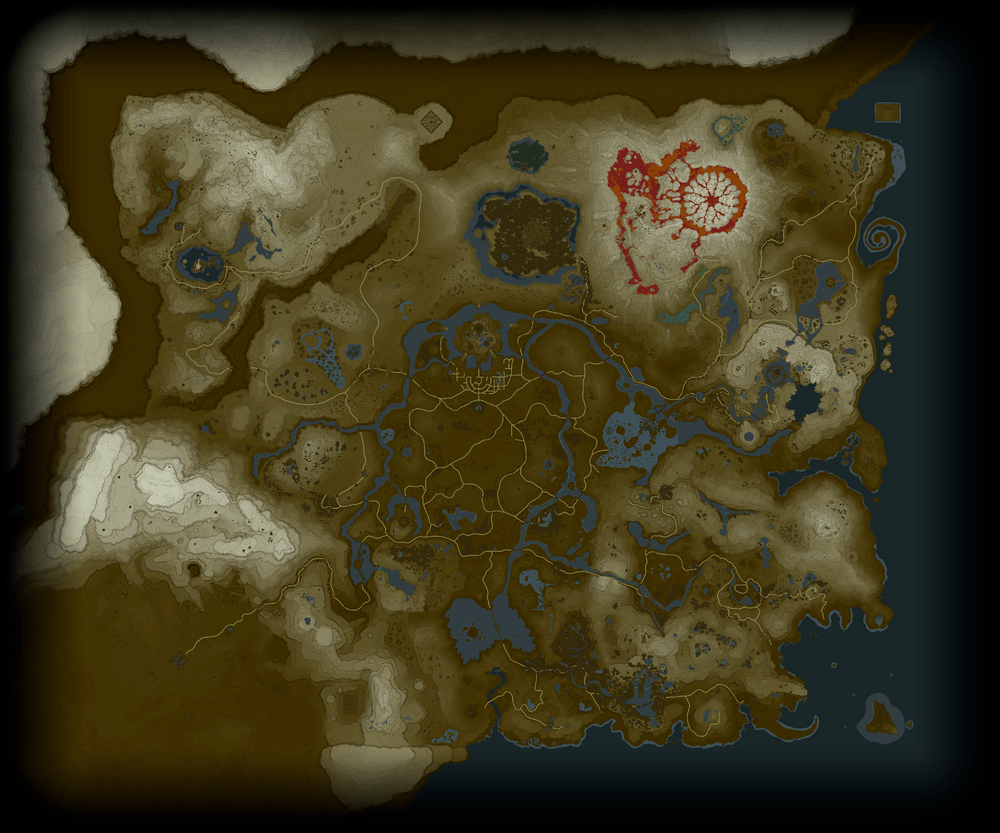
The entirety of Hyrule – for context, Hateno Village is on the northern arm of the bay in the southeast corner of the map. I’m not going to 100% complete TOTK, but there will come a time when I decide I’ve seen enough. The credits will have rolled, every nook and cranny of the Depths will be charted on my map, and I’ll deem the kingdom saved one more time. I’ll put the game away for months, or even years before booting it back up. But as it happened with BOTW a few years ago, I will feel like I’ve spent my fill of time in this version of Hyrule. The mysteries I encountered will be fully illuminated, foes will be vanquished, and the entire experience will simply be a fond memory to look back on until the next time Hyrule needs a hero to step up and save the kingdom once more.
None of this speaks to any faults of Tears of the Kingdom. I truly believe that Nintendo has captured lightning in a bottle twice in such a way as to completely overshadow its previous releases in the series. Every moment I experience is an absolute blast. As I continue to explore the game’s world, I’m astounded, and a little intimidated, by the amount of content that is present in its polished state.
More than ever before, Nintendo has encapsulated Shigeru Miyamoto’s founding philosophy for the series. The original 1986 release was famously inspired by his childhood spent exploring the forests around his home in Kyoto; seeing a cave and wondering what secrets it may hold, or charting a path through the verdant gloom of the trees.
Shamelessly pulled from Wikipedia:
According to Miyamoto: “When I was a child, I went hiking and found a lake. It was quite a surprise for me to stumble upon it. When I traveled around the country without a map, trying to find my way, stumbling on amazing things as I went, I realized how it felt to go on an adventure like this”.
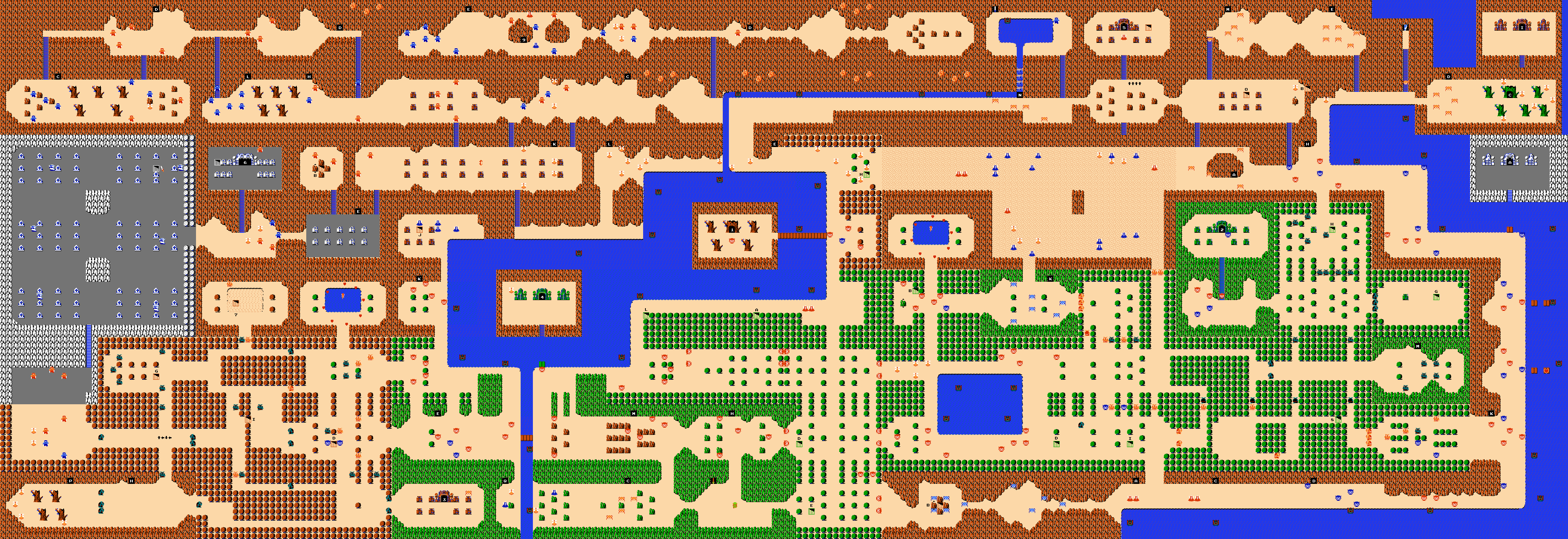
Hyrule’s original form in 1986 Nintendo has done the impossible and fully realized this dream twice over. While I can look forward to every future installment of the series, that does put replaying the games into a bit of a bind. Even though the games are expansive, they are also static; they won’t change substantially on further playthroughs. So while I may have fun running around Hyrule for a few hours, that same feeling of discovery and wonder can’t be repeated. Like Breath of the Wild, Tears of the Kingdom will become another happy memory of an adventure that only Nintendo is able to provide.
The Legend of Zelda has cemented itself as a main avenue for many to engage with the world with a returned sense of wonder. Miyamoto grew up in a world that I didn’t even really have – his home in Japan was surrounded by forests and walkable streets ripe for exploration. I’m sure I’m not alone in bemoaning my suburban, car-centric childhood where it was dangerous to stray too close to the road without supervision.
The thirty-seven year legacy of The Legend of Zelda has enabled millions to explore like they always wanted to. In a world increasingly covered in cement and metal, the appeal of a fantastical fight to stop a malevolent ecological disaster from spreading is abundantly clear. I stress with all possible intensity – please play these two games. Every moment I play Tears of the Kingdom I feel a little sad that I won’t be able to experience it the same way twice. However, the magic of Zelda’s legacy is not dissimilar from the magic of Peter Pan’s friend Tinkerbell; all the audience needs to do is believe and we can find the same wonder and discovery in our own world.
-
I Am Told

Hi everyone – been a while. If you follow me on Instagram, I’ve been fairly vocal about all sorts of the societal… issues that have honestly really gotten in the way of my writing. I promise, though, that my reading has not and will never be slowed. While I still ponder my next long-form blog post, I though I’d share a bit of another project.
I have a small collection of poetry, most hardly anything more than a few scribbles to work out some angst. This one below, that I’m tentatively naming ‘I Am Told’, is one that I actually feel good about – I think free verse might come most naturally to me. Inspired by recent events, I felt up to putting it out for folks to read. So, enjoy!
Content warning: implied transphobia/homophobia and implied suicideI am told that night is darkest before the dawn.
Or that you can’t legislate out hate, only
Wait and see who stands up
And hope, plead that they have the courage you sorely miss.Yes, Spring follows Winter, but why does it
Still feel so cold? The sun’s sweet succor
Penetrates the day but still thaws no hearts.
They remain shuttered, resolute in dark ignorance.I’m also told that our time will come.
Indeed history bears it out, but
Still – I must scream for those who cannot,
Those whose voices are silenced while we wait.I’m told that this one (which one?)
Is a senseless tragedy
With no precursor or forethought.
How could we have known?But we did know, we told you so.
We scream and gnash and tear
And when we try to speak
Are summarily silenced in the name of holy decorum.Decorum?
You say it like such excess still matters
When we faceless statistics are fighting for our breaths
And yet are maligned as we find joy in our hedonistic Pride.So instead we must tell each other
Like a mantra obsessively repeated
That we matter, we were here
And yes, maybe, the dawn will appear.Their stories won’t be told except
By us who remember.
Not just serving as a cautionary tale
But someone who was real and who mattered.I tell you that you are beautiful.
You, lovely, however you come.
Winter’s diminutive day looms mountain-high,
But you, who matter, will surmount the night.blogging, bookstagram, free verse, LGBT, LGBTQ, poem, Poetry, pride, queer, trans, transgender, writing -
The Shadow of the Gods – John Gwynne’s Inspired Take on Norse Mythology
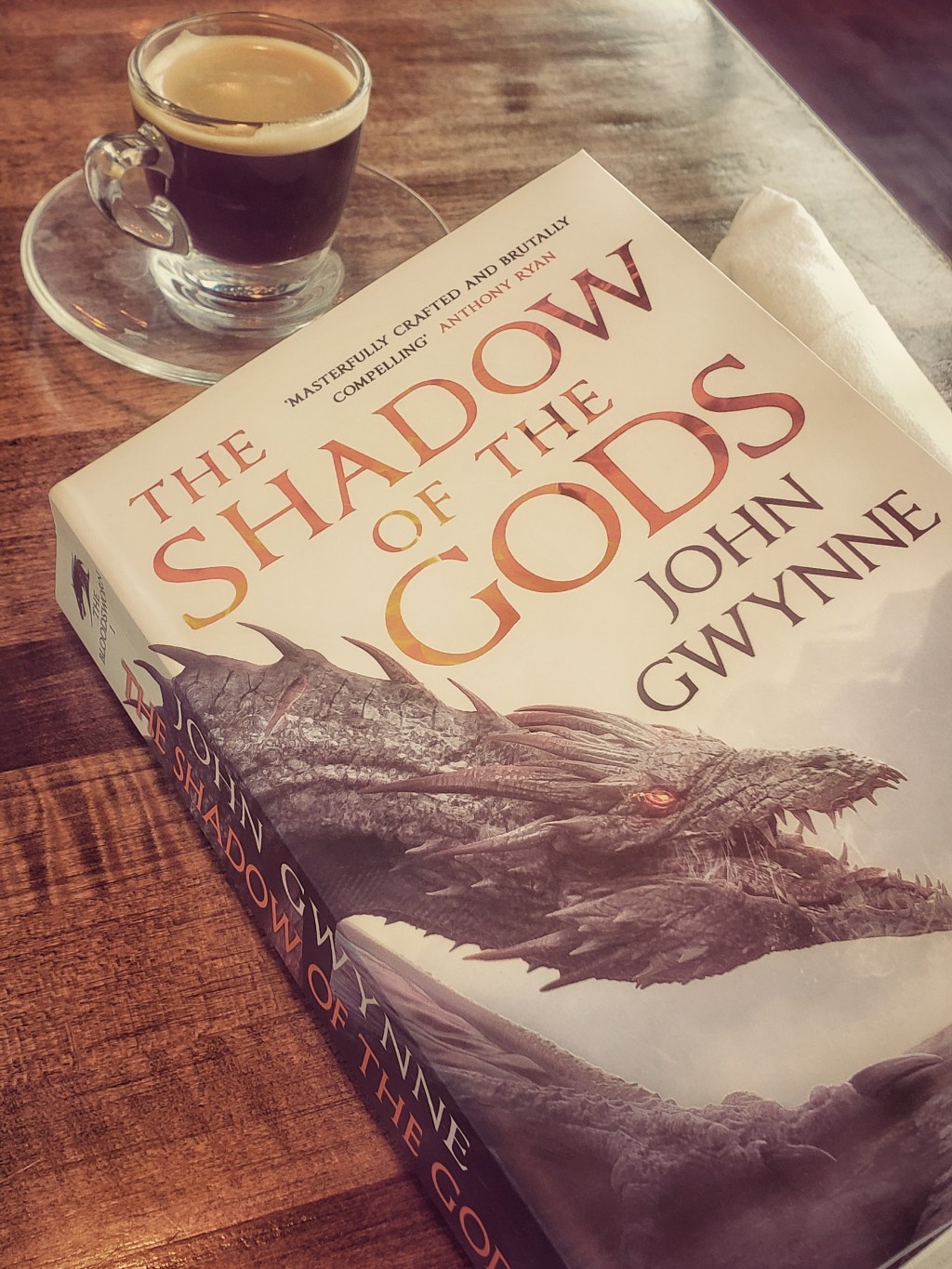
The Shadow of the Gods is the first entry in John Gwynne’s latest series, the “Bloodsworn Saga”. After reading all seven of his prior novels, I went into this 2021 release hoping for the same level of masterful worldbuilding that is his trademark. Now, I can firmly say that he is the greatest contemporary epic fantasy writer out there.
It took me a few chapters to fully fall into the new world of Vigrið (ð being pronounced as the th fricative as in father), but I felt fairly well suited for it because of my background knowledge on his inspiration. You see, John Gwynne’s method of worldbuilding is deeply rooted in the cultures and history of our own world. The Shadow of the Gods, and the Bloodsworn Saga at large, feels immediately like a study in historical northern European cultures. presenting a world populated by analogues to the historical Norse and Germanic peoples. It’s more than just inspired by these cultures – in many ways it feels like Gwynne has directly translated the entire society and placed it within a fantasy world to accommodate his storytelling.
The usual suspects of Norse culture are present, including sea-bound raiders and access to the Afterlife being reserved for those dying an honorable death, weapon in hand. Under the surface though are details that truly inform an understanding of European history. Norse mythology is baked into the lives of Vigrið’s populace, the characters living in a world scarred by the last battle of the gods, Guðfalla – known to us as Ragnarök. The story takes place a few centuries after this great conflict, the society collectively deciding to shun and deride the gods whose battles shattered the land. Living in the gods’ shadows is an act of rebellion in itself, with their lives in the harsh landscape marked by endlessly squabbling jarls and raids by rampaging monsters known as vaesen.
Gwynne takes great effort to show the impact the dead and imprisoned gods have on our characters. Because of the communal hate toward the gods, those tainted with divine blood are treated as worse than the lowest thrall laborers, despite their innate magical powers. Entire cities are constructed out of the bones of the gods. A single glance at the book’s map reveals that the mountain range that bisects Vigrið contains the continent-wide skeleton of Snaka the snake and king of the gods (fans of Jörmungandr rejoice). In the plot, this shows as characters ignorantly repeat the mistakes of their ancestors and failing to respect the real power the dead gods still possess.
But it’s not all sweeping vistas and grand conflicts. John Gwynne has always had a knack for filling epic histories with relatively small heroes caught up in the chaos. In The Shadow of the Gods, Gwynne strategically places characters for us to follow; a huntress seeking her kidnapped son, another a runaway royal fighting in a warband, and the last an escaped thrall seeking vengeance against his slavers.
Their stories are kept largely separate, with only a scant few side characters crossing over. We get to know our main characters in isolation, learning about their varied backgrounds, bonds, and motivations. Gwynne leaves just enough hints to allow readers to connect some of the dots on their own before their storylines begin to converge. Eventually, as all of their destinations start syncing up, it becomes clear that there’s more connecting these characters than just a uniform setting. Indeed, the very last page reveals a major twist stitching up a dangling plot thread that actually made my jaw drop.
I reiterate that John Gwynne is today’s greatest epic fantasy writer. Not because he creates alien and unknowable settings for his stories, but for the opposite – he can create worlds that feel all too familiar to our own. He crafts the most effective heroes I’ve seen that are impossible not to root for. The fact that reading his books rewards intimate knowledge of European history (and Asian history, in his previous books) is just a bonus on top.
To anyone whose blood stirs at the crack of linden-wood shields snapping together in the shield wall or finds wonder in the dazzling waters of fjords, this book is not to be missed.
-
Georgie, All Along Tempers its Romance with Thoughtful and Relatable Characters

Georgie, All Along is a 2023 contemporary fiction romance by Kate Clayborn, an author well-versed in the genre of romantic fiction. According to her bio, Clayborn writes “contemporary romances about smart, strong, modern heroines who face the world alongside true friends and complicated families”, a description that fits Georgie to a T as all the listed criteria are on full display.
I would most succinctly characterize this recent release as a Hallmark Channel romance without most of the schmaltz. Don’t worry, if your best friend in romantic fiction is a box of tissues, there’s still plenty of room for heartstring-tugging. There is an obligatory meet-cute with the small town’s gruff, bearded, and reclusive artisan with a heart of gold. While perhaps a tad bit predictable, the devil, so to speak, is in the details of the characters.
When Georgie herself is presented to us in the first chapter, she is introduced as a woman on the younger end of the millennial spectrum, packed tight with all the accompanying neuroses we all grew up with. She feels an intense amount of shame over returning home from Los Angeles after recently being let go from her cushy, if hectic, career as a Hollywood magnate’s personal assistant. Left aimless after losing the drive that catering to her boss’ every whim provided her, she agrees to return home, temporarily. Her stated justifications are to both plant-sit for her vacationing parents and help her best friend move into a new home and handle her late-term pregnancy. In secret, though, Georgie has spent the last ten years unsure of the direction in her life and hopes returning home will remind her of a spark she’s lost.
During the course of her housesitting, Georgie meets Levi. The reclusive and insular Levi is the town hermit, known both for his dependable dock building skills and his history of petty crime. The romantic (*ahem* sexual) tension is dialed up to eleven and halfway through the novel they fall for each other. Mercifully, though, that’s nowhere near the end of their story and it isn’t until much later on that lingering issues are resolved and the ‘happily ever after’ occurs.
There are two main themes that run through Georgie, All Along. First, Georgie’s journey examines the difficulties a young person faces in deciding on an identity for themselves. A large portion of the novel involves Georgie revisiting her adolescent life and all the hopes and dreams she had held for high school that faded by the time she graduated. This narrative is immediately relatable to young adults, many of whom may also have struggled to find their own role in a confusing world.
Interweaving with Georgie’s thread is Levi’s, our other main character. He faces a contrasting problem: in his teen years he chose an identity for himself, one that put him at such odds with his family that he was effectively banished from the home. The experience leaves him psychologically scarred and creates much of the dramatic tension between him and Georgie as he chafes at her attempts to return to a time that only brings forth pain for Levi. Not to give too much away, but his character growth was what I was most excited for as I read, ending in a truly heartwarming series of encounters.
Clayborn writes Georgie, All Along with these two narrators, splitting the novel into two concurrent stories. The first time we get inside Levi’s head is also when he properly meets Georgie. Their meet-cute is more of a meet-fumble, with his decades of personal baggage with his wealthy family getting in between them on more than one occasion. At this early point in the book we as the audience have a vague hint of the past events in Levi’s life, but we’re mostly left confused and concerned along with Georgie as he reacts strangely to her innocent questioning about his locally famous family.
I freely admit that this sort of novel is not my normal fare. The few romance novels I do read are invariably focused on queer characters. So while the primary cast of Georgie is largely white and heteronormative (minus a couple of queer side characters), Levi provides a glimpse into class prejudice that brings some thematic weight to the story. His family is rich, and Levi’s ostracization from them and years of trouble-making have made him the black sheep of the normally sleepy town of Darentville, Virginia. Levi also provides a clear window into the effects of trauma, where any mention of his family can cause him to either seek escape from the situation or, if cornered, to fly into a rage.
The dual perspective of this novel was a fascinating way to write. It removes a lot of the stereotypical drama involved in a romance by very clearly showing the reader that both characters positively have the hots for each other. That doesn’t take away from the romance, though; instead of focusing on the progression of falling in love, the bonds that grow between Levi and Georgie build toward a climax of healing past wrongs. Their romance is handled like an inevitability, leaving the dramatic tension to build toward whether each character will overcome their pasts. The most important journeys in this novel revolve around forgiveness and patience as both main characters reconcile their respective failures to launch and how they intermingle with each other’s.
-
The Poppy War Had Promise But Wasn’t Quite What I’d Hoped

I’ve found an author that I can legitimately say I don’t like reading.
Bold, I know, but let me explain.
So last year, I read and wrote a review for Babel: An Arcane History by R.F. Kuang. I praised the book for its nuanced and imaginative incorporation of fantasy into real-world history, creating a believable setting with thematic weight to back it up. Babel unfortunately fell off in the climax; I wrote that I felt like I was “reading a newspaper relating the events of the day” as the final pages unfolded. The characters were not active participants in the climax, relying instead on exposition to explain what was happening, leaving the story feeling limp.
Nevertheless, I turned to Kuang’s earlier works. I really wanted to like The Poppy War. After the promise of Babel, I was hoping for the same thoughtful theming with perhaps a snappier plot. Fundamentally, though The Poppy War exists in a fictional world, it may as well follow the same pattern as Babel and present a real-world history altered by magic. Additionally, I’m always searching for more Eastern-inspired fantasy after reading favorites like Parker-Chan’s She Who Became the Sun and Kristoff’s Lotus War trilogy. Last year I almost ranked Steel Crow Saga on my books of the year list before my research unveiled some unfortunate truths about its author (look it up if you must; it took some digging on Twitter and hoo-boy).
I generally enjoyed Babel, so I went into The Poppy War excited for its fantastical retelling of warfare and politics between China and its neighbors. By the time I was halfway through, I was sad to find that Babel’s same overly expository language plagues The Poppy War. While I finished and generally enjoyed Babel, I actually had to put The Poppy War down early. This same feeling where the perspective character was sitting in a room, looking out a window and seeing the actual events of the story happen pervaded the first half of the book. More than two years had passed in the plot yet I was left with little notable impression from any of the characters, even as the more significant ones get killed off. War had broken out and the goings-on of the heroine felt so bland and removed from the interesting conflict.
I was three-hundred pages in and I felt like Kuang had yet to really hook me with any narrative weight. Worse, I realized I had been carried along for all those pages on a wave of story beats built entirely upon tired tropes of the fantasy genre, a sentiment I’ve since seen repeated in reviews on Goodreads.
Off the top of my head, here are the most prominent and egregious tropes (all of which can, strangely, be immediately connected to Harry Potter):
- Girl from an abusive foster family escapes her situation to be trained at an elite academy
- Magical school
- She is looked down on by many for her upbringing
- Rich classmates take an immediate dislike of our heroine and attempt to sabotage her
- A nasty professor detests the main character and shuns her
- Wizened, austere mystic favors the main character and trains her in arcane arts
- As a ‘chosen one’, the main character surpasses all expectations with some inherent ability
What ultimately broke my interest in the book was realizing an entire plot point was lifted from the most seminal of childhood novels for my generation: Holes by Louis Sachar. Bear with me here.
In the novel, The Poppy War’s main character was tasked with carrying a pig up a mountain where it would drink from a spring and grow strong. Of course, the other motive was to strengthen our swine-laden heroine in the meantime. That scratched at an old memory of mine, wherein a character from Holes was forced to similarly take a pig up a mountain. A few days ago, I was having dinner with my family. My sister, for reasons I can’t recall, brought up the character Madame Zeroni from Holes. It all clicked suddenly. I had to look it up immediately because I thought I was crazy. But no, the exact same thing happens in Holes, with a character repeatedly watering a pig at the top of a mountain, though in this case to produce the superior wedding gift.
This wasn’t just a recognizable trope; Kuang lifted an entire set piece from what’s likely one of the most read books of my generation. I know The Poppy War was a debut novel, but this broke my already waning interest. My attention had already been flagging due to the lack of memorable characters or interesting plot developments. But this book just suddenly seemed lazy to me, and so I lost interest three-hundred pages in.
The most unfortunate thing is there were portions of the novel that truly grabbed me. Kuang writes interpersonal drama and action sequences with captivating style. The halfway point in The Poppy War saw a city siege and battle that was executed wonderfully and I thought this was the moment that Kuang would reel me in. But then the excitement passed, the setting changed, and a handful of new supporting characters are introduced in the span of two pages. The plot grinds to a halt. In a more well-paced book, I felt like that should have been the end of book one and the beginning of the second.
Regardless, going back to Kuang’s debut novel made it apparent how I honestly enjoyed her follow-up work much more by comparison. Yes, there was plenty about Babel that irked me, but Kuang’s meticulous attention to academic theory is on clear display in both novels (curiously, she does seem to have a pervasive interest in writing about magical schools, a trope I must admit that I enjoy). Even with my negative experience with The Poppy War, I look forward to whatever comes next for R.F. Kuang. There is a certain magic to the fervor Kuang brings to her worldbuilding, so I hope that energy gets captured once more.
Do I currently enjoy reading Kuang’s books? No – regardless, I do hope her next release will strike all the right chords with me and I can then revise my judgment.
-
The Last Night – a D&D 5e Short Story

This is a fictionalized account of a recent scene in my Tuesday Dungeons & Dragons group’s campaign. We, The Winding Wanderers, are about to take on the Big Bad, Vincent Somain, so I wanted to immortalize our calm before the storm in the best way I can. A few of the characters below are the OC’s of my friends: the elven Elora, the goliath Ailani, the gnomish Faye, and my own neurotic human Isabel. Other characters belong to our Dungeon Master: Esme, Kimmad, Gerbo, and others.
While it’s a Fifth Edition campaign, the events have been adapted for dramatic intent. Isabel herself is a homebrewed Warlock with magical control of shadows and the mind with a shadowcat familiar named Tiruva. My love for Jay Kristoff’s heroine Mia Corvere and the bloody world of Nevernight is on full, shameless display here.
Imitation is the highest form of flattery, they say.
*Character art in the image above by @monroe.bays on InstagramThe shadows rested softly as indeterminate night settled in the subterranean enclave of Derstagon.
It had been Isabel’s idea, originally. The whirlwind of events of the past few weeks had left the Winding Wanderers with little time to rest, let alone breathe. Their flight from Port Descilyr, just days prior, now felt like ages ago. The group of now wanted criminals had chosen refuge in the shadows of Derstagon out of necessity. Even so, Isabel felt a creeping suspicion that her days here were numbered; the long arm of the government would eventually reach them here, too. So, wanting to avoid thinking about that for just a few hours, Isabel had proposed one last night of revelry to remind them all of better times.
Isabel floated from conversation to conversation, hugging the periphery of the crowd but avoiding the solitude she normally sought. Tiruva walked before her and she followed his not-shape as it weaved through the legs of her friends. She stopped her perambulation, taking a moment to catch up with Kimmad. The draconic sorcerer’s shadow wolf lay curled around his feet. Tiruva’s form rippled slightly as he rubbed against the beast, a movement Isabel had come to understand as his approximation of purring.
Putting all her effort into not talking strategy for once, Isabel inquired about Kimmad’s life here in Derstagon. She still found herself fascinated by the collection of shadow magic users under the mountain. The failed mine notwithstanding, Derstagon seemed to her to be a tight-knit society devoted to their… philosophy? God? She still wasn’t entirely sure, her own connection to the dark making it all the more confusing. On the few opportunities she put any thought into what may come after, Isabel hoped to spend some time here researching and maybe learning a bit more about herself. Kimmad’s own connection with his shadowwolf seemed as good a place as any to start.
After a few minutes, Kimmad frowned at his empty cup and excused himself to track down the nearest bottle of wine. As he turned away his wolf rose up, stretched luxuriously, and followed him. Isabel smirked, noticing its shadow was slightly too dark. With the slightest of mental pushes, Isabel called out to Tiruva. The cat’s eyes flashed momentarily like the moon appearing through thick clouds as he faded and the wolf into the crowd.
“Made a new friend, I see,” Isabel remarked then took a sip of wine.
. . . don’t be so surprised . . . He whispered into her thoughts, projecting the nonchalance only a cat could muster. . . he’s not so bad, for a smelly dog . . .
“Indeed?” Isabel laughed at the thought. “Well, don’t get him into any trouble. You and your grand machinations against the Oppressor can wait one night.”
. . . no promises, Isabel . . .
Leaving her daemon familiar to his endless plotting, Isabel made for the center of the party. As had become the norm in Derstagon, every large group gravitated towards the outsized persona of Gerbo Thistlepeak. The small man stood upon a central table, leading his rapt audience in some folk song Isabel had never heard before. From the sound of things, very few of his listeners had either, as the only other clear voice she could hear was that of his daughter Faye; the rest seemed perfectly happy to incoherently follow the tune and swing their mugs around.
Personally more inclined to enjoy such an event from the outside, Isabel scanned the crowd for Ailani, expecting them to be at least slightly more subdued than the rest. Their towering stature, normally simple enough to spot, was nowhere in sight. Isabel glanced at her Band of the Found out of habit. Its enchantment enabled it to always locate its partner, no matter the distance. The compass was stationary, pointing straight at a small group, at the center of which stood Elora. She stood arm-in-arm with her brother, his voice one of the few to actually enunciate the words of Gerbo’s song. On her other side stood Embrel. The genasi was one of the few not singing along, his eyes on Elora as a soft smile graced his features.
They’ve grown . . . close, Isabel thought before putting that away to think about later.
Remembering Ailani had given their Band to Elora, Isabel pulled the Shadowtag Coin she’d bonded to them out of her pocket and studied its face. Its simple enchantment allowed one to easily follow the path of another. The lights in its eyes pointed straight at a wall but continued to move, fast enough to tell Isabel that Ailani was close by and clearly walking somewhere.
Frowning, Isabel kept watching the coin. Ailani wasn’t usually one to disappear like this without warning, but as long as they were still somewhere in Derstagon it wasn’t a big deal. Isabel was about to go off in search of her friend when she felt her hair shift on her right side as if in a light breeze.
. . . you’re going to give yourself another headache if you pinch your eyebrows so much . . . Tiruva perched on her shoulder, his soft voice breaking her concentration. She glanced over at the shadow cat and he licked his paw then ran it across his incorporeal head.
“You felt that, huh?”
. . . Isabel, we share thoughts, consciously or otherwise . . . He fixed one green eye on her . . . when you get occupied with a conundrum, my head feels like it’s wrapped in wool until you snap out of it . . .
“Ah, right,” Isabel said, shaking her head slightly. “I forgot. Again. I’m sorry, you know I tend to get caught up in my head sometimes.
. . . a perfectly useful skill most of the time. Perhaps follow your own advice and try to relax . . .
Though well meaning, Tiruva’s words only reminded Isabel about the coming day. In just a couple hours, the Winding Wanderers were going to be back in Ascyran. Their last handful of visits had only confirmed to the group that that’s where Somain, Chaucer, and everyone else was holed up. The lion’s den, so to speak.
If their battle yesterday was anything to judge by, Lord Somain had long figured out the best ways to counter Tiruva and Isabel’s skills. The ever-present light in the underground cathedral had turned Isabel completely ineffectual, her greatest strength weaponized against her.
Deep under the mountain here in Derstagon, Isabel felt a connection to her powers far stronger than nearly anywhere else. It made sense to her that this of all places would be the home to others touched by the dark. After getting back last night, she had experimented with the shadows, trying to come up with an idea she could work with against Somain. In recent weeks she had felt her mastery of the dark and her connection with it strengthening to sometimes frightening results. She was fairly certain she could bring it through long enough to make a dent in any magical light, but that will –
. . . you’re doing it again . . . Tiruva chided, wrapping his tail around the back of Isabel’s neck.
“Sorry,” Isabel sighed, trying to center herself.
She was moderately successful at this when a small cheer rose up behind her. Faye raced past her and Isabel turned to see what was happening. Faye pushed aside partiers’ knees on her way to the door, her giggling piercing through even as she disappeared from view. Isabel glanced up and saw the cause of the commotion.
Ailani had returned, and sure enough the Shadowtag Coin was pointing straight ahead. A rare flush graced their stony grey features as they smiled at the ragtag assembly. They suddenly held a cup of wine, likely Faye’s doing, and waded into the party.
Isabel made to step forward and welcome them back when she realized they weren’t alone. Ailani reached back with their free hand and pulled another figure into the throng. Esme, clad in a delicate yellow dress, shyly greeted her friends as she was pulled through the door. A pink bow in her hair accentuated the absurd saccharinity of her appearance. Her golden dress was as surprisingly bright in the room as the sun itself would be, dispersing any shadow remaining upon the revelers.
Isabel froze. Subconsciously she pulled, the shadows around the room flickering and grasping toward her. Colors became muted as the light failed to bring them out. The grand fireplace sank into embers, the wall sconces dimmed to a weak flicker. Isabel’s shadow flared, distorting like a heat mirage. Everyone nearby was too focused on the new arrivals to notice, but Tiruva tensed, hissing soft enough that only Isabel could hear. He sank into her shoulder, his shadow and mind joining hers, massaging out the freeze that had overcome her thoughts.
Isabel smiled. She chided herself silently for her oversight, for forgetting that Esme, like Isabel, naturally kept to herself. She took a deep breath and stepped forward to welcome her friends back to the party, happy that Ailani remembered to invite Esme. She collected Tiruva into her arms and the shadows rested softly once more.
-
2022 Reading Round Up
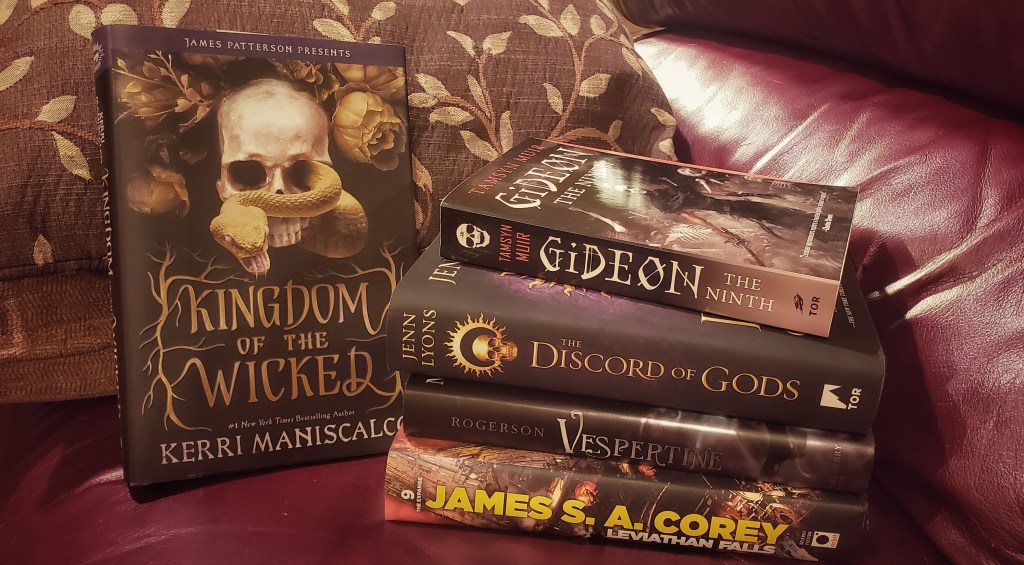
As 2022 comes to a close, I feel like it’s necessary to summarize what may well have been my most active year of reading in quite a while. What started as trying to establish a good habit – of reading for a set amount of time each night – has reignited my love of all things reading and. More recently, it’s also encouraged me to write about my favorite books. While I didn’t keep track of precisely how many books I started and finished, I know I can attribute a large portion of my home library to 2022 alone.
I feel obliged now to break down my favorites from 2022, though I’ve never liked having to rank the best out of any medium. My responses change by the day and often devolve into “yes, but…” and “oh! But also…” progressions. For example, if forced to pick a single favorite movie, I’d be tempted to say, “The Lord of the Rings trilogy. Yes, all three of them.” I’m insufferable.
So, on to the list. Below, I’m going to dig into my five favorite books that I read this year. This isn’t a definitive ranking, and not all of them I would count as the ‘best’ books I read this year; they’re just the ones that stuck with me the most and made an impact on me. These mini-reviews will just focus on the facets of each book that marked them as unique. Otherwise, we’ll be here all day. Without further ado, the first to make the list is…
Gideon the Ninth by Tamsyn Muir and my Love-Hate Relationship with
Everything About ItTo be honest, I refrained from picking Gideon up for months after first seeing it, intrigued by its summary and reviews but unsure if it was really my style. Even after buying it, it was maybe forty or so pages before I really got Muir’s writing. However, The Locked Tomb series is a hot topic nowadays, so peer pressure eventually made me commit. I don’t regret it for a moment, even considering the strangeness of the book.
Many things in Gideon don’t make sense, sometimes aggressively so. It’s a who-done-it that obscures not only the murderer in the mansion but also honestly what the hell the protagonists are even doing. The necromancy that takes center stage in Gideon, while simple enough in concept, takes chapters and chapters to fully let the reader understand exactly what its rules are. Muir has written a magic system that lies directly in the middle of hard and soft magic, creating an uneasy medium where you have no idea what’s going to happen next but whatever it is it still manages to make sense.
Gideon also has the distinction of featuring the most infuriatingly slow-burn romance I’ve read recently. Due to the online popularity of the two main characters, I knew going in that something was going to happen between them. On many occasions I found myself yelling at Griddle and Harrow to ‘get on with it,’ and when they finally do it’s as perfect as it is tragic.
Gideon is unabashedly queer, a tradition that continued into the sequel. It’s a rollercoaster of emotions that will have you falling in love with its characters only to pull the rug out from under them in the next chapter. There are times where I loved to hate it, but in a good mischievous sort of way. I’ve only read the first two Locked Tomb books, but I’m certainly excited to see where it goes next.
The Discord of Gods by Jenn Lyons Wraps Up My Favorite Story in Epic Fantasy
This series-finisher delivered on all the promises made all the way back in The Ruin of Kings. I’ve written about this series’ worldbuilding before, going into detail about the remarkable use of religion that Lyons included. On a broader scale, I can’t stress enough how the series, A Chorus of Dragons, had everything I could possibly want in a sweeping fantasy. It somehow managed to steadily introduce an obscene number of supporting protagonists, all of whom managed to be fully developed and related to the main plot in some way, while still effectively moving things forward. There is no shortage to the imagination on display here, from the surprisingly humorous plotpoint of an undead kraken having a domestic quarrel with a dragon to what’s perhaps a most refreshing take on the love triangle trope.
Speaking at length about Discord would likely spoil too much about the preceding entries, but I can make a few promises. In the tradition of proper high fantasy, A Chorus of Dragons is full of momentous acts by gods and men alike. The flashier bits play off of some of the sharpest, snappiest writing I’ve ever encountered, leading to many laugh out loud moments that made me fall in love with the characters all the more. Discord lives up to its pedigree in both the explosive and quiet moments, its momentous conclusion subverting expectations to the last.
What I’d like to emphasize is that this novel is perhaps the biggest inspiration for this blog as a whole. Discord influenced my latest foray into fictional prose and worldbuilding, something I hope will eventually be in a place to share with everyone. Through connecting with my own writing itch, I decided to start analyzing my favorite and latest books, and the rest is history. So, thank you Jenn Lyons for indirectly helping make this blog a reality.
Kingdom of the Wicked by Kerri Maniscalco Brings the Pulp and the Heart
Kingdom of the Wicked, like Gideon, is a book that seems to be something of a social media darling. Its flashy cover art caught my attention, and reading the summary made me cautiously excited for its promises of demons and the Sicilian streghe (witches) entangled with them. My hesitancy came from my recent brush with the lurid ACOTAR series by Sarah J. Maas and its cavalier approach to fan service. On the surface, Kingdom looked to be a similar fare full of steamy romance between its hapless heroine and the dark, brooding, and dangerous men that snatched her up. In other words, not interested.
Eventually, I saw enough bookstagram posts of the series that I gave it a shot and my worries were happily proven wrong. Maniscalco immediately solidifies her heroine Emilia as a fixture of her family and hometown. A huge emphasis is placed on the intersection of Emilia’s witchcraft and cooking, as her family runs a popular restaurant in Sicily. Her story is plagued by a tragedy in the first pages that sparks a mystery as she tries to find the demon who killed her sister. Emilia’s desperation leads her to summoning a demon for information, but she quickly finds herself in over her head as the ritual she uses summons one of the powerful Princes of Hell, Wrath. If you’ve read any paranormal romance, you likely know where this is going.
Nonetheless, any budding romance between the two surprisingly takes the backseat. Instead, the focus is more on the two learning to trust each other as allies. Maniscalco seems to be building up the sequel to have more of a focus on the romantic subplot, which is honestly refreshing. This allowed Kingdom of the Wicked to lay a solid foundation of what’s more immediately important. If Emilia was overly distracted from her sister’s death by Wrath, I’d have some serious questions about her believability as a character. Kingdom revels in its classification by Maniscalco as a “new adult” novel, a label that made perfect sense. She gave Kingdom just the right amount of fan service to give it that YA feel while still having plenty of substance to back it up.
Vespertine by Margaret Rogerson Leaves Me Dying for a Sequel
Continuing on with the theme of malevolent spirits harassing young women (dang I guess I had a phase this year), I read Vespertine and loved it. Around the end of 2021 I discovered Margaret Rogerson, a new but increasingly well-known name in YA fantasy. I quickly read through her entire backlog, and Vespertine is perhaps her most unique work. While Rogerson’s two previous books featured capable women that nonetheless nearly became damsels, Vespertine’s Artemisia is different.
I won’t get too into the weeds on the backstory, but Artemisia finds herself bound out of necessity to an incredibly powerful, supposedly evil spirit. This labels her a pariah, forcing her to flee from her home and into the countryside. What follows is a kind of story you’d expect, full of religious intrigue, dark magic, and old secrets. The novel is excellently paced with new characters and settings interspersed with tense action sequences and important plot discoveries.
Artemisia herself shines as the main character, producing a believable character progression. She begins the story astonishingly socially awkward, something that I’m sure endears her to many young fantasy readers. The spirit she carries with her becomes her initially unwilling co-protagonist and the two develop together. She gains the confidence to take up the role of Vespertine and the spirit, capable at any moment of untold destruction, develops sympathy for mankind to curb its bloody tendencies.
Honorable Mentions:
– Hell Followed With Us by Andrew Joseph White
– Gallant by V.E. Schwab
– Aurora Rising by Jay Kristoff
– She Who Became the Sun by Shelly Parker-ChanAnd lastly…
Leviathan Falls by James S.A. Corey ends the Greatest Fiction Project, Bar None
If you have either not read The Expanse nor seen the Prime Video adaptation, stop what you’re doing. Pick up your book/remote. Read/watch the entire series. It’s that good.
Okay. Now that you’ve gotten through The Expanse… There’s very little to say about James S.A. Corey’s writing that doesn’t just rely on superlatives. Leviathan Falls is book 9 of a series that started a decade ago with Leviathan Wakes, and what a ride it has been.
The Expanse begins on a bedrock of the most realistic depiction of astrophysics and hard sci-fi out there. Concepts such as the rigors of sub-light travel, extreme distance and light lag, low-gravity and its effects on the body, and Lang Belta (a creole developed by colonists of the asteroid belt) just scratch the surface of what makes this series unique. The true genius of The Expanse is how real it feels, how believable it is that it’s telling our future. By the time we get to Leviathan Falls, the narrative has morphed from asking “what would humanity be like if it colonized the solar system?” to asking the question “how would humanity be changed if it encountered the stuff of science fantasy in the dark between the stars?”
Over the nine books, there is a slow progression as we come to understand the yawning maw of the expanse itself. The Expanse is a cautionary tale of the perils of unrestrained government and corporatocracy, how humanity has a tendency to sink the ship we’re standing on, and the tribalism that emerges when our backs are against the wall. At the same time, Corey believes in humanity’s ability to adapt to any situation, seen literally in the effects of low gravity on the body and thematically in the dogged persistence of the Belters, adrift in space without a gravity well to call home.
More than anything, I wish I could experience The Expanse over again for the first time. Corey managed to find that sweet spot of conveying the awe of exploring the unknown that I haven’t felt in another fictional world. In the coming months I’ll probably be putting together an essay on Leviathan Falls and The Expanse, once I find the right angle to take. It feels like there’s almost too much to talk about, even a year after its finale.
Leviathan Falls itself is a simple story about learning to live with each other because once the Churn hits, each other is all we have. Oye beltalowda. Xalte ere gova da Cant.
achorusofdragons, andrewjosephwhite, aurorarising, blogging, book, books, bookstagram, expanseonprime, gallant, gideonnav, gideontheninth, harrowtheninth, hellfollowedwithus, jamessacorey, jaykristoff, jennlyons, kerrimaniscalo, kingdomofthewicked, leviathanfalls, leviathanwakes, literature, margaretrogerson, opinion, reading, review, shellyparker-chan, shewhobecamethesun, tamsynmuir, thediscordofgods, theexpanse, theruinofkings, veschwab, vespertine, worldbuilding, writing -
The Wilderwomen – the Paranormal Road Trip for Everyone Feeling a Bit Lost
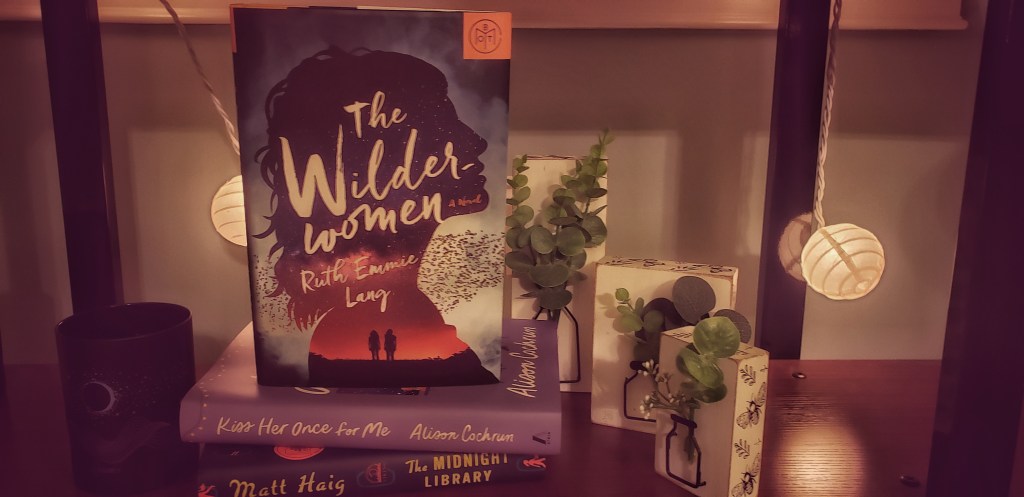
The Wilderwomen is a 2022 contemporary fantasy novel by Ruth Emmie Lang. Evoking classic tales of soul-searching American road trips, the story focuses on two half sisters, Finn and Zadie Wilder, as they drive off from their homes in Texas in search of their mother who has been missing for the past half-decade. The twist on the formula, however, is that both women have unique psychic abilities.
We know from the beginning of the story that Zadie and Finn have these powers. The two were forced to grow up without an explanation for these abilities and they just believed they were special. Both hide them from the public, and Zadie in particular has spent years suppressing her precognition even from herself. As the sisters reunite for Finn’s high school graduation after five years of increasing estrangement, old wounds come to a head. Finn insists on going, with or without her older sister, to find out what happened to their mother Nora.
The great mystery of the plot concerns why exactly their mother left all those years ago. On the surface level, the Wilder sisters’ abilities make for obvious advantages in searching across the country for traces of someone. Even so, their abilities are handled with the proper thematic weight and I was struck by how Lang was able to incorporate the them into a storytelling device for their shared history. Zadie’s ability to see the future contributes to her own anxiety regarding where her life and the life of her unborn child is headed, all while living in denial about her lack of answers from her mother. Meanwhile, Finn’s ability allows her to see the past, contributing both to her overwhelming desire for answers as well as her reckless abandon for the consequences of her actions that ties back to one of the first details we learn about her. To an extent, one of them is future-blind and the other is past-blind. This struggle between the sisters echoes through the entire novel, framing the central conflict as the fallout of misunderstandings and withheld secrets.
The sisters have been left with no shortage of emotional baggage to sort through. Zadie and Finn both exhibit symptoms of trauma due to parental neglect, occurring both before and after Nora’s disappearance, and both sisters found ways to compartmentalize the pain. Set against the changing environs of the American West, The Wilderwomen is more of a story about healing forgiveness than it is about superpowered women. Accordingly, the sisters learn much about themselves and their mother in the process of their journey.
Lang’s writing powerfully captured the appeal of the road trip novel, using the shifting setting and characters at hand to move the plot forward. With each stop the sisters made, I was left wishing I could spend more time with the colorful individuals they came across. But as the book came to a close, I felt like that was part of the point Lang was making; we’re all shaped by the places we go and the people we meet, but sometimes we just have to move on and find where we truly need to go.
The Wilderwomen is a story about following your intuition, even if it takes you clear across the country. Lang tells the reader that it is never worth sitting in stagnation in your current situation if you feel the pull to move on. Perhaps abandoning your daughters and ghosting your entire life may not be the most sympathetic vehicle for this message, but I’ll simply say that I, along with the Wilder sisters, came to forgive their mother for her actions.
What I found slightly unbelievable, however, was how easily the girls found other people with paranormal powers. Their two major stops along their road trip were populated by others with psychic abilities. The powers of the people they met also were used to advance the plot along, making them more important than mere side characters. I formed plausible theories as to why they met so many other superpowered individuals, but the book unfortunately doesn’t tackle that question. Perhaps not everything has to be explained, but at the same time it was odd that on their journey they met more people with powers than without.
Though some of the people the girls come across are a little too conveniently placed, that didn’t detract from the enjoyment I had in getting to meet them. Lang’s novel doesn’t overstay its welcome and focuses consistently on driving the plot and its characters’ relationships forward at all times. As part of their respective sixth senses, the two Wilder girls are constantly finding themselves drawn forward, often out of their control, toward wherever they should be. They often know that they are lost, and Zadie in particular is forced to grow, let go, and follow her intuition. The Wilderwomen delights in the many ways a journey can transform characters, all the while easily finding the right occasions to stop and allow the reader to breathe, whether that be under the stars at an Arizona campground or fly-fishing in an Oregon forest.

Blake is Reading.
Have book, will travel
Reviews, Opinions, & Sounding Boards
This blog started as a result of my desire to just talk about all the books I love and all the ways they inspire me. While all the posts will of course be chock full of my own opinions and ruminations on my favorite books, I really want to hear from other people too! Please reply if something in a post speaks to you, but also if you disagree in some way; I’d love to talk with you. Happy reading!
Updates are *usually* on Thursdays
Follow @blake.is.reading on Instagram for updates
Recent Posts
-
2023 Media Round Up
Another year gone, another year of reading, watching, and playing to reflect on. Last year, I focused my end-of-year round-up purely on my reading, as that is obviously the original focus of this blog. A year later, I now know I’d equally like to give credence to video games and television shows as well for…
-
Tears of the Kingdom – Nintendo Captures Lightning in a Bottle… Then They Do It Again
The thirty-seven year legacy of The Legend of Zelda has enabled millions to explore like they always wanted to. In a world increasingly covered in cement and metal, the appeal of a fantastical fight to stop a malevolent ecological disaster from spreading is abundantly clear.
-
I Am Told
Hi everyone – been a while. If you follow me on Instagram, I’ve been fairly vocal about all sorts of the societal… issues that have honestly really gotten in the way of my writing. I promise, though, that my reading has not and will never be slowed. While I still ponder my next long-form blog…
-
The Shadow of the Gods – John Gwynne’s Inspired Take on Norse Mythology
We get to know our main characters in isolation, learning about their varied backgrounds, bonds, and motivations. Gwynne leaves just enough hints to allow readers to connect some of the dots on their own before their storylines begin to converge. Eventually, as all of their destinations start syncing up, it becomes clear that there’s more…
 Blake is Reading