
To even begin to explain the impact of The Legend of Zelda, I’ll need to set the scene of Hateno Village. As an aid, here’s the town’s soundtrack: https://www.youtube.com/watch?v=Uj07-YU5cTk
Climbing to the highlands of Necluda in the east of Hyrule, your first sighting of Hateno is likely the village gate, a rustic construction consisting of two stone pillars propping up a simple wooden beam with a hanging sign. This architecture style becomes consistent with each passing building, both the form and function communicating the peace that the village promises. Stepping into the town proper, you’ll find yourself in an informal town square and be approached by the largest collection of Hylian citizens you’ve seen so far. One of the few settlements left untouched by the Calamity a century ago, the people here remain unchanged from their past ways, living simply and happily as a tight-knit farming community. Everything you see communicates the town’s status as a peaceful haven away from the destruction most of Hyrule faced 100 years ago.
The player’s only reminder of their ultimate goal to defeat Ganon is the comparatively high-tech laboratory whose silhouette can just be seen perched on a cliff above, a narrow switchback path leading the way. the player knows they’ll eventually have to climb the hill and carry on with preparing for their fight, but for now they feel like they’re able to take a breath.
My first visit to Hateno six years ago in Breath of the Wild gave me, the feeling of being a stranger coming to town, being welcomed by the villagers but also still feeling like an outsider. I was able to meet the townspeople and learn their various jobs and roles on the farms and even help out here and there. Over time, Hateno Village even becomes the place where you can build and decorate your own house in the game. Still, the overwhelming pressure of trying to save the ruined kingdom of Hyrule loomed overhead. Literally.
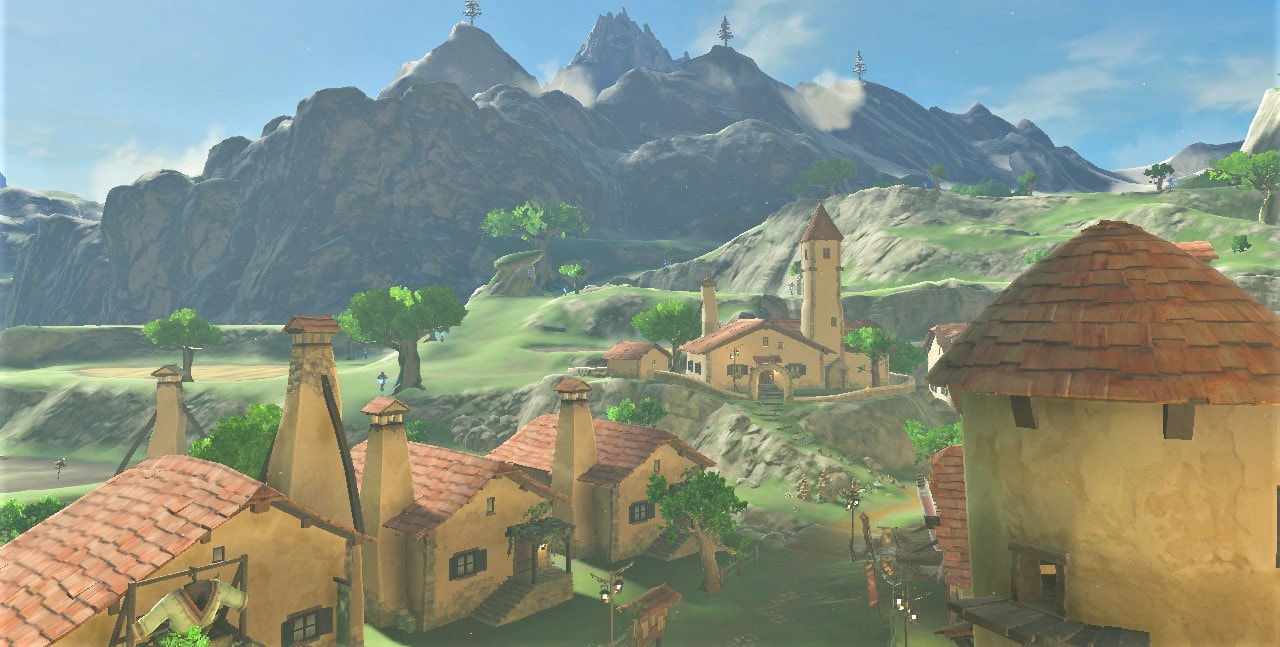
Walking back through the gate of Hateno in Tears of the Kingdom felt tangibly different. Rather than being a stranger coming to town, I had the distinct feeling of being a traveler returning home after years away and acclimating to the town moving on without you. The town has grown and even changed a little bit, new businesses have opened up and there are far more people walking around the town square. The town has even become a kingdom-wide destination, with travelers on the road and in other towns talking about Hateno’s up-and-coming status. A subplot was even written into the game where the conservative-minded farmers are at odds with the advances in style and technology embraced by other villagers. The player is given an active role in smoothing out tensions and helping the people come to a middle-ground solution. On finishing this little quest, I’d come to appreciate that the kingdom of Hyrule had evolved from being a vacant sandbox in BOTW to becoming a lived-in world that I had a part in as the player.
Weeks later, I have come to the realization that my first, and current playthrough of Tears of the Kingdom will likely be my only playthrough. I’m hard pressed to spend any of my free time on anything else besides romping around, above, and below the kingdom of Hyrule. I think that this will be my only playthrough because, even more so than its predecessor, Tears’ entire design ethos revolves around evoking a sense of wonder for the unknown.
Breath of the Wild released in early 2017 and delivered grandly on its promise of grounding the famously nebulous world of Hyrule into a geographically consistent world, one teeming with discovery and exploration. BOTW, often criticized for its lackadaisical approach to narrative, did at least establish an interesting world history to enrich its setting. The ‘lore’ was so interesting that Nintendo and Koei Tecmo teamed up to produce Age of Calamity, a game set in the events of BOTW’s history, giving players a non-canon taste of the rich story this Hyrule could offer. Six years later, it’s clear that Breath of the Wild was always intended to be the prequel laying the groundwork for the eventual 2023 main release, Tears of the Kingdom.
There’s tired, old adage that X walked so that Y could run. That’s all I can think of; there couldn’t be a better idiom to explain the relationship between the two games. TOTK was able to hit the ground flying because it felt like coming home. When I took that first leap off of the Great Sky Island after the introduction, I was presented with the same open-ended question as in BOTW. The expanse of Hyrule was below me and the only thing left to do was to choose which direction to walk. However, players are now equipped with all the knowledge and memories of their previous experiences in Hyrule.
An unknown amount of time has passed since the credits rolled on Breath of the Wild and players are dying to know how their favorite characters are all faring. Many players may seek out the friendly camaraderie found in a character like Prince Sidon of the Zora and rush off to the east. Maybe, knowing the ethnic origins of the game’s main villain, they’ll make for the Gerudo Desert in the southwest to seek insight on how to fight this new foe. Players such as myself, may feel tempted to head south and liberate the coastal Lurelin Village after hearing a rumor from passing travelers that pirates had invaded the town.
However, I quickly decided on my first destination. I felt compelled to grab one of my horses (sidenote – it was a stroke of genius by Nintendo to carry over your horses from BOTW) and travel northwest to the frigid Rito Village to check in on some of my favorite characters from the first game. Not to spoil anything, what I found surprised me and showed me that not everything I knew would be the same as I’d left it six years ago.
In fact, that six year gap feels like it was baked into the story of TOTK. Nintendo took the bold step of creating their first direct sequel in the series, but they seem to have taken into account the curiosity players have about the world they remember. All of the major settlements are still there, and they may feel familiar, but like in Hateno Village a number of things have changed over the years. Characters are older, many have retired or moved on to other callings in life, and others that were children six years ago have taken up the mantle of leadership today.
As I said it’s still Hyrule, but it feels like it has moved on in your time away.
So why do I say I likely won’t have a second playthrough? Well, it’s not for lack of interest. Yes, the game is long (almost incomprehensibly so, even considering its predecessor’s legacy), but I’ve sunk countless hours into other games and still find replayability in them. No, as I explore Hyrule the driving factor of wondering what’s over that next hill will only drive me so far, because eventually I will have seen what’s over every hill.
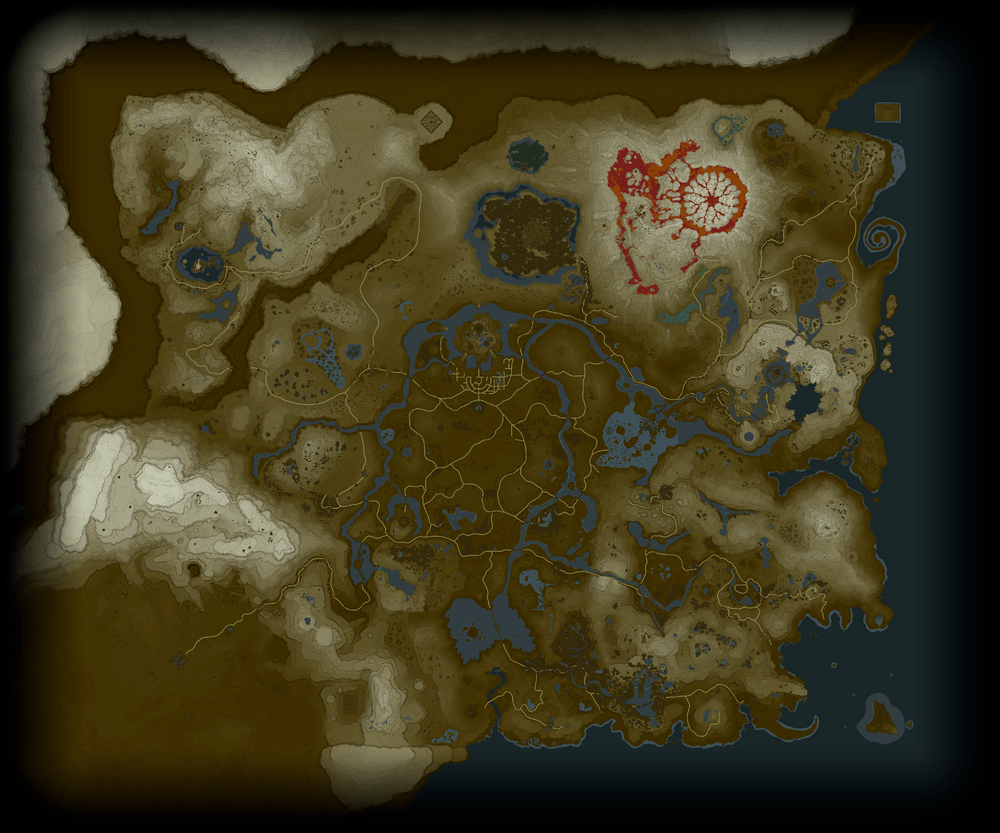
I’m not going to 100% complete TOTK, but there will come a time when I decide I’ve seen enough. The credits will have rolled, every nook and cranny of the Depths will be charted on my map, and I’ll deem the kingdom saved one more time. I’ll put the game away for months, or even years before booting it back up. But as it happened with BOTW a few years ago, I will feel like I’ve spent my fill of time in this version of Hyrule. The mysteries I encountered will be fully illuminated, foes will be vanquished, and the entire experience will simply be a fond memory to look back on until the next time Hyrule needs a hero to step up and save the kingdom once more.
None of this speaks to any faults of Tears of the Kingdom. I truly believe that Nintendo has captured lightning in a bottle twice in such a way as to completely overshadow its previous releases in the series. Every moment I experience is an absolute blast. As I continue to explore the game’s world, I’m astounded, and a little intimidated, by the amount of content that is present in its polished state.
More than ever before, Nintendo has encapsulated Shigeru Miyamoto’s founding philosophy for the series. The original 1986 release was famously inspired by his childhood spent exploring the forests around his home in Kyoto; seeing a cave and wondering what secrets it may hold, or charting a path through the verdant gloom of the trees.
Shamelessly pulled from Wikipedia:
According to Miyamoto: “When I was a child, I went hiking and found a lake. It was quite a surprise for me to stumble upon it. When I traveled around the country without a map, trying to find my way, stumbling on amazing things as I went, I realized how it felt to go on an adventure like this”.
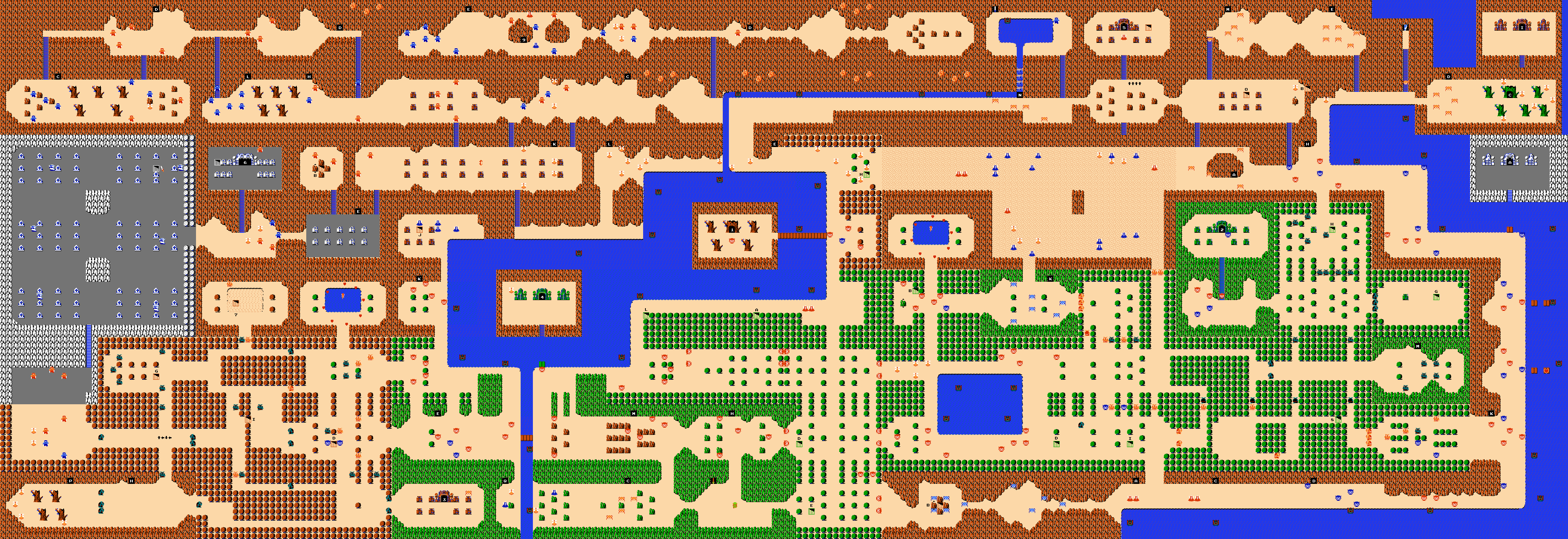
Nintendo has done the impossible and fully realized this dream twice over. While I can look forward to every future installment of the series, that does put replaying the games into a bit of a bind. Even though the games are expansive, they are also static; they won’t change substantially on further playthroughs. So while I may have fun running around Hyrule for a few hours, that same feeling of discovery and wonder can’t be repeated. Like Breath of the Wild, Tears of the Kingdom will become another happy memory of an adventure that only Nintendo is able to provide.
The Legend of Zelda has cemented itself as a main avenue for many to engage with the world with a returned sense of wonder. Miyamoto grew up in a world that I didn’t even really have – his home in Japan was surrounded by forests and walkable streets ripe for exploration. I’m sure I’m not alone in bemoaning my suburban, car-centric childhood where it was dangerous to stray too close to the road without supervision.
The thirty-seven year legacy of The Legend of Zelda has enabled millions to explore like they always wanted to. In a world increasingly covered in cement and metal, the appeal of a fantastical fight to stop a malevolent ecological disaster from spreading is abundantly clear. I stress with all possible intensity – please play these two games. Every moment I play Tears of the Kingdom I feel a little sad that I won’t be able to experience it the same way twice. However, the magic of Zelda’s legacy is not dissimilar from the magic of Peter Pan’s friend Tinkerbell; all the audience needs to do is believe and we can find the same wonder and discovery in our own world.
 Blake is Reading